
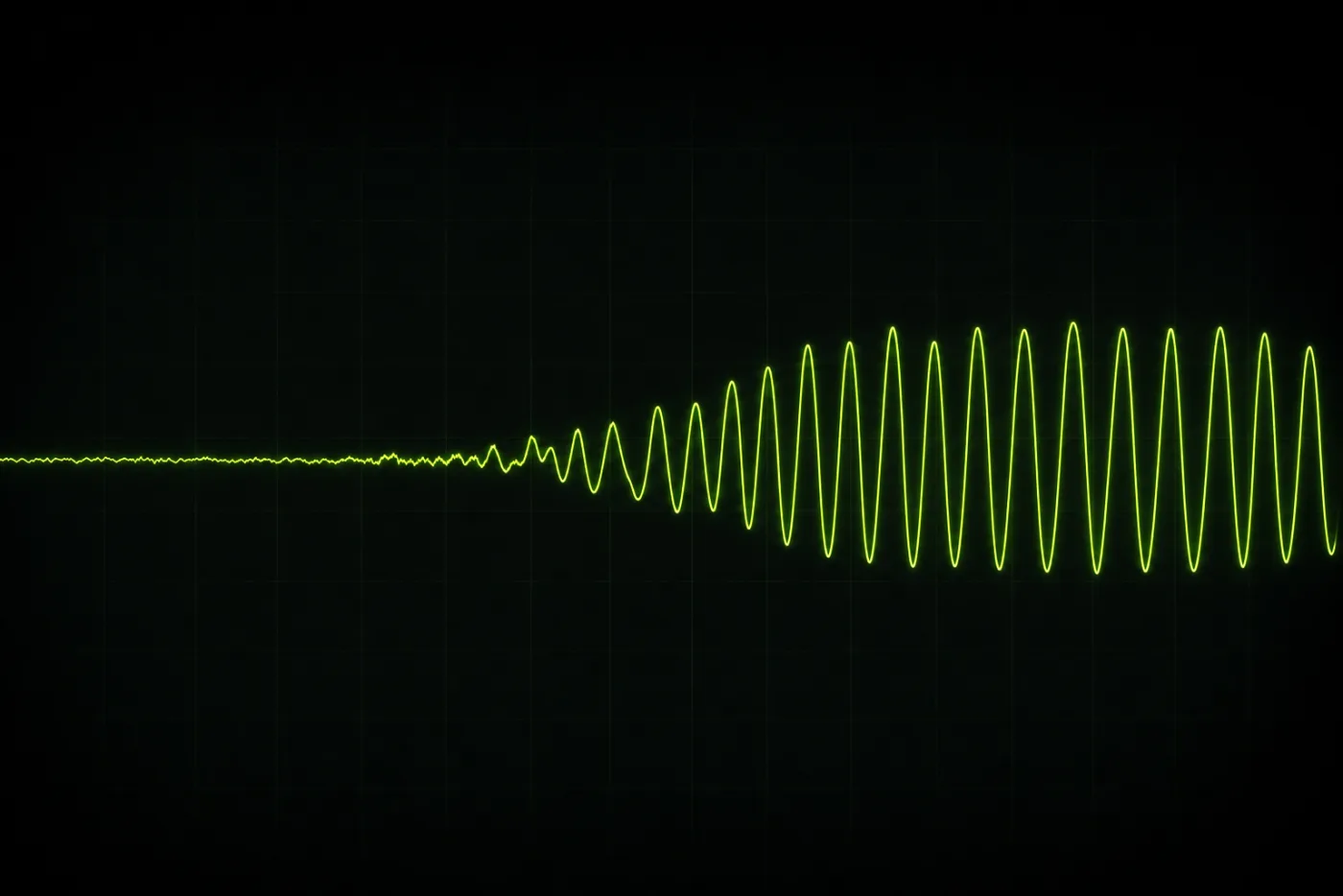
Back in 1924, a German psychiatrist named Hans Berger recorded electrical activity from the human scalp for the first time. He noticed something odd. When a person closed their eyes and relaxed, a steady rhythm showed up around 8 to 12 Hz. When they opened their eyes, it faded. That rhythm is now called the alpha wave, and the effect is called the Berger effect.
It sounds small. But it was the start of EEG, and it still matters today.
Here is why we care. If you want to trust a focus score, you first need to trust the signal under it. Alpha suppression gives us a clean test. Close your eyes, alpha should rise. Open them, alpha should drop. If a device shows that pattern, it is reading your brain and not just noise.
We run this check on our own hardware. It is basically the fastest honest way to prove the thing works. No fancy setup. Just eyes open, eyes closed, and watch the 8 to 12 Hz band move.
Alpha is only one part of the picture. Focus needs more than that. But the Berger effect is where EEG started, and it is still the first thing we look for when we bring up a new board.